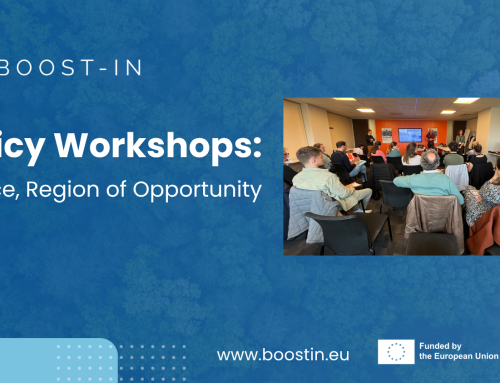

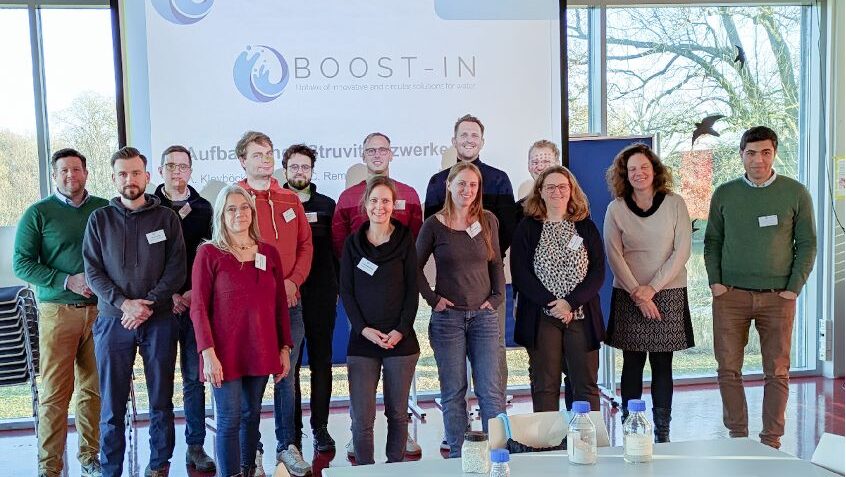
As Europe strives for greater resource independence, the recovery of phosphorus from wastewater remains a critical yet underutilised opportunity. To address the barriers hindering the market uptake of recovered phosphorus—specifically struvite—the BOOST-IN project recently convened a high-level co-creation workshop in Braunschweig.
Hosted by Abwasserverband Braunschweig and Stadtentwässerung Braunschweig GmbH (SE|BS), and moderated by experts from Kompetenzzentrum Wasser Berlin (KWB), the event united the entire value chain: wastewater treatment plant operators, struvite producers, recyclate brokers, scientists, and organic farmers.
A New Network for German Struvite
A central outcome of the collaborative session was the proposal to establish a German Struvite Network. This initiative aims to consolidate knowledge, harmonize quality standards, and create a stronger collective voice for producers and users of recovered nutrients in the region.
Policy Recommendations: Reducing Red Tape
While the technology to recover phosphorus exists, regulatory hurdles continue to slow its adoption. Participants at the workshop formulated concrete policy recommendations to accelerate market uptake:
-
Simplify CE Certification: Stakeholders called for amendments to the EU Fertilising Product Regulation (2019/1009). Key demands include reducing reliance on costly external controls in favor of self-control mechanisms, abolishing complex certification requirements for small volumes, and establishing a dedicated German CE certification entity.
-
Legal Certainty: There is an urgent need to clarify legal frameworks to provide planning security for long-term Circular Economy investments.
-
Market Incentives: The group advocated for strengthening political willingness to apply recovered fertilizers in agriculture and creating market demand by integrating sustainability criteria, such as the CO₂e-footprint, into procurement and pricing models.