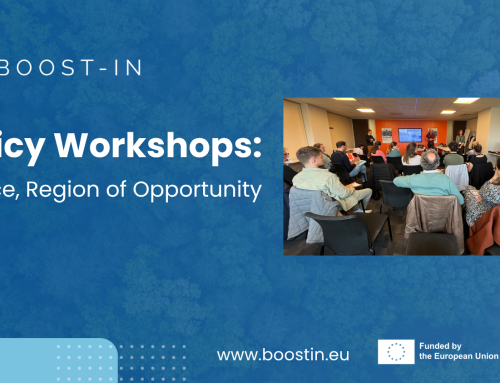

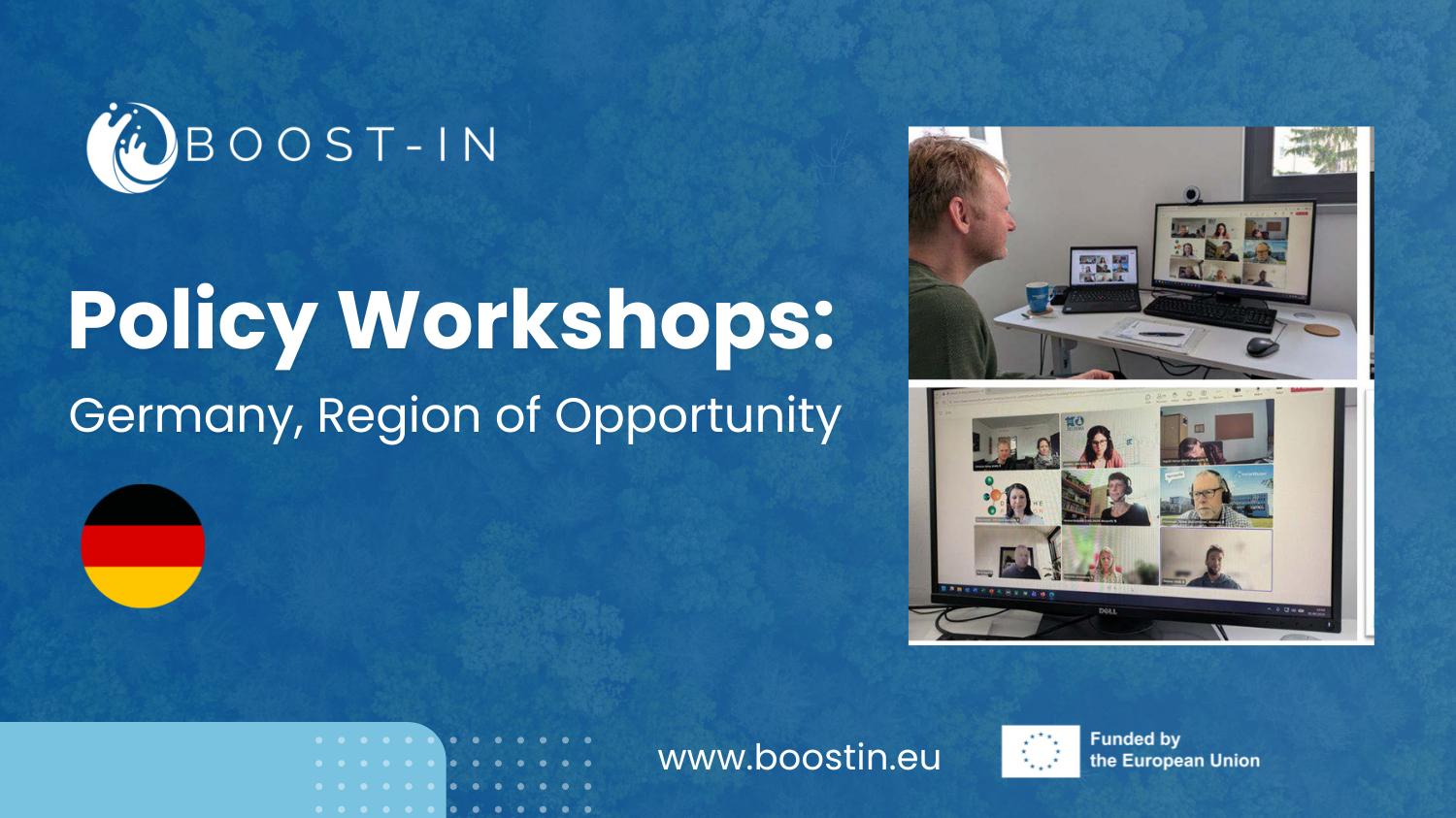
On 1 June 2026, the BOOST-IN project held an online policy workshop for its German Region of Opportunity, Lower Saxony, bringing together stakeholders to discuss how policy frameworks can better support water-related circular economy solutions, with a particular focus on phosphorus recovery from wastewater.
The workshop provided an opportunity to build on Germany’s experience with phosphorus recovery and identify recommendations that could support both national implementation and wider European policymaking. The discussion was particularly timely in light of the revised EU Urban Wastewater Treatment Directive (UWWTD) and upcoming requirements related to nutrient recovery.
Lower Saxony provides an important context for this discussion. The region faces an agricultural nutrient imbalance while also having considerable potential to recover phosphorus from wastewater and return valuable nutrients to productive use. However, regulatory requirements, market conditions and coordination between different actors can still limit the uptake of circular solutions.
Key Findings and Prioritisation of Barriers
During the workshop, participants assessed and prioritised the main barriers currently affecting phosphorus recovery. The discussion highlighted four key areas:
- Regulatory and standards barriers: Identified as the highest-priority challenge, current requirements can disadvantage certain phosphorus-recovery routes. Participants also highlighted unclear end-of-waste status for recovered materials and complex procedures that can create additional obstacles, particularly for smaller quantities.
- Social acceptance and information barriers: The market for recovered products is still developing, while awareness and acceptance among potential users remain important considerations. At the same time, interest in recovered fertilisers is emerging among parts of the agricultural community.
- Institutional barriers: Participants highlighted insufficient communication and coordination between federal states, national authorities, different legislative areas and sectors including agriculture, environment, water and wastewater.
- Economic, financial and technological barriers: Greater incentives are needed to support large-scale implementation and encourage early adopters. Participants also noted that regulatory requirements can favour established recovery routes, making it more difficult for innovative technologies to enter the market.
From Workshop Findings to Policy Recommendations
The discussion showed that advancing phosphorus recovery is not only a technological challenge. Clear regulation, stronger institutional coordination, viable markets and supportive economic conditions are also needed to bring innovative recovery solutions into wider use.
The workshop also provided valuable insights for the implementation of the revised Urban Wastewater Treatment Directive, which strengthens the European framework for circularity and resource recovery from wastewater.
Drawing on Germany’s experience, the results will contribute to BOOST-IN’s work on developing evidence-based policy recommendations for the German Region of Opportunity. These recommendations can also provide useful input for other EU Member States as they implement the revised UWWTD and for the wider European discussion on minimum phosphorus-recovery requirements.
Through its Regions of Opportunity, BOOST-IN continues to bring together policymakers, utilities, industry, researchers and other stakeholders to identify the practical changes needed to accelerate the transition towards a Water-Smart Circular Economy.