
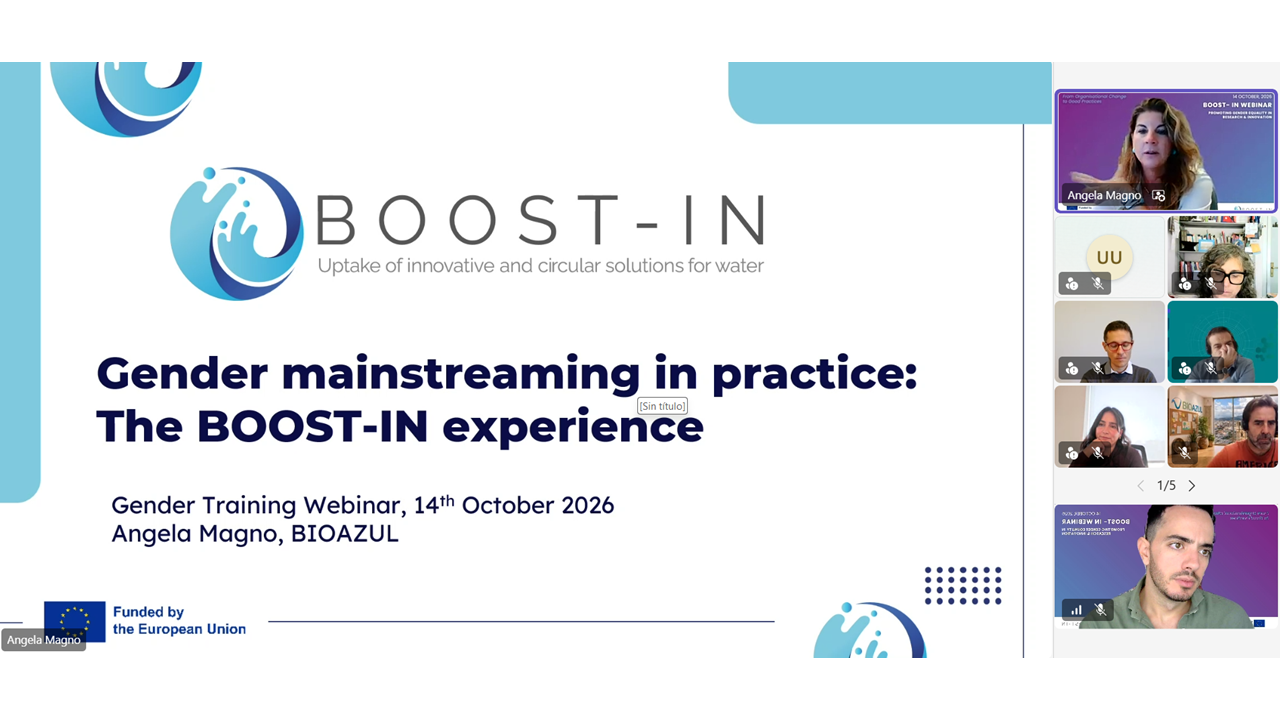
On 14 October 2026, BOOST-IN organised an open gender training webinar entitled “Promoting Gender Equality in Research & Innovation: From Organisational Change to Good Practices”, bringing together European policy perspectives and practical experiences to explore how gender equality can be effectively integrated into research and innovation (R&I).
The session, hosted by Stevo Lavrnic from the University of Bologna (UNIBO), opened with an intervention by Giulio Pattanaro from the European Research Executive Agency (REA), who introduced the European R&I policy context for gender equality.
Angela Magno, BOOST-IN Coordinator at BIOAZUL, shared the project’s experience in translating gender commitments into practical actions. Through its Gender & Ethics Action Plan, Gender Committee and monitoring indicators, BOOST-IN has integrated gender considerations into project governance, stakeholder engagement, communication and innovation support.
The presentation highlighted some of the project’s achievements, including 57% female representation within the consortium, 46.2% female participation across project events and 73.3% of assessed events achieving gender-balanced participation. Beyond these figures, BOOST-IN has implemented initiatives to strengthen the visibility and opportunities of women innovators in the circular water economy, including dedicated webinars, networking opportunities and tailored innovation support.
Drawing on the experience of the EU-funded PLOTINA project, Dr. Matilde Tura from the University of Bologna presented how Gender Equality Plans can drive institutional change. PLOTINA supported the development and implementation of tailored Gender Equality Plans in six European research organisations, providing practical tools and methodologies for identifying inequalities, implementing targeted measures and monitoring progress. Examples from the University of Bologna illustrated how these approaches can translate into concrete institutional improvements.
The webinar concluded with an interactive discussion, highlighting the importance of moving beyond numerical gender balance towards meaningful participation, shared responsibility and concrete actions. The experiences presented offered valuable lessons that can be transferred to other research organisations and EU-funded projects.
Through this initiative, BOOST-IN continues to promote gender mainstreaming, capacity building and the exchange of good practices to support more inclusive research and innovation.
Missed the webinar? Watch the full recording and explore the speakers’ presentations to learn more about the experiences and lessons shared. Click here.