
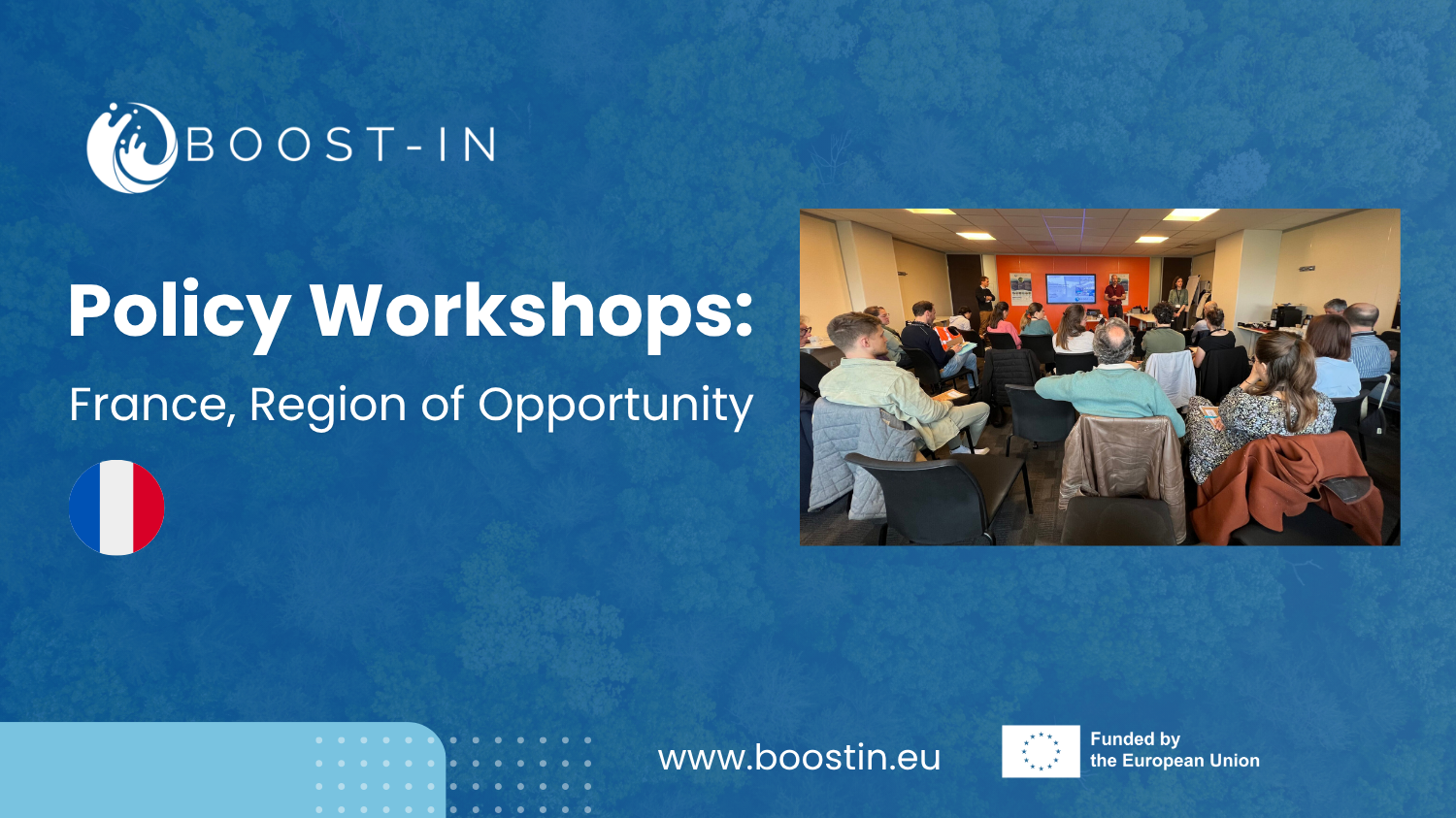
The BOOST-IN project recently held an online policy workshop dedicated to the French Region of Opportunity – the Mediterranean coast, bringing together stakeholders to explore how policy can facilitate the safe and sustainable development of potable water reuse and associated Water Circular Economy Solutions (WACES).
The French Mediterranean region faces increasing pressure on its water resources. Water scarcity, climate change, population growth and a strong tourism sector are increasing the risk of potable water shortages, making innovative approaches such as direct and indirect potable reuse (DPR/IPR) increasingly relevant.
Within BOOST-IN, project partner Ecofilae is leading work to identify regional policy needs, barriers and enabling factors that can support the uptake of innovative solutions while reducing pressure on water resources and strengthening stakeholder acceptance of potable water reuse.
From identifying barriers to developing policy solutions
The workshop was designed as a validation and co-creation exercise, building on previous BOOST-IN activities on potable water reuse and the project’s wider analysis of policy barriers and enabling factors.
Around 36 participants took part, representing public authorities, water utilities, private companies, research organisations and other stakeholders from across the French Region of Opportunity.
Participants assessed barriers across technological, economic, social, institutional and regulatory dimensions before discussing five policy recommendations addressing the highest-priority challenges.
The results demonstrated that moving towards potable water reuse requires much more than technological readiness. Clear regulation, reliable evidence, public confidence, institutional capacity and economic viability must develop alongside technical solutions.
Regulatory clarity emerges as the top priority
The most highly ranked barrier was the lack of clear guidance, harmonised standards and consistent interpretation of requirements, receiving 24 votes.
Participants stressed the importance of establishing clearer methodological and regulatory frameworks for complex and innovative potable water reuse projects. Consistent guidance is particularly important for providing certainty to project developers, operators, authorities and other stakeholders involved in implementation.
Technological and sanitary concerns were another major priority. Uncertainty regarding the sanitary and environmental impacts of existing technologies received 22 votes, reflecting the need to demonstrate that solutions can reliably protect both human health and the environment.
The discussions also highlighted concerns linked to membrane systems, brine management, water-quality monitoring and the need for appropriate methodological frameworks for project development.
Building public trust in potable water reuse
Social acceptance was identified as another critical dimension. Distrust towards potable water quality and water reuse received 18 votes, highlighting the importance of communication, transparency and awareness raising.
For potable reuse to gain broader acceptance, stakeholders emphasised the need to engage citizens and other actors throughout the process and provide accessible, evidence-based information on water quality, health protection and environmental impacts.
Institutional capacity also emerged as an important challenge, with limited institutional support and administrative capacity receiving 17 votes.
Economic considerations were likewise highlighted. Participants noted that the long-term benefits of potable water reuse can be difficult to demonstrate, particularly when projects require significant initial investment. Developing robust cost-benefit analyses from the early stages of projects could therefore help strengthen the case for investment.