
The BOOST-IN database provides a valuable overview of Water and Circular Economy Solutions (WACES), highlighting their main characteristics, areas of application, technology readiness levels, and geographical distribution.
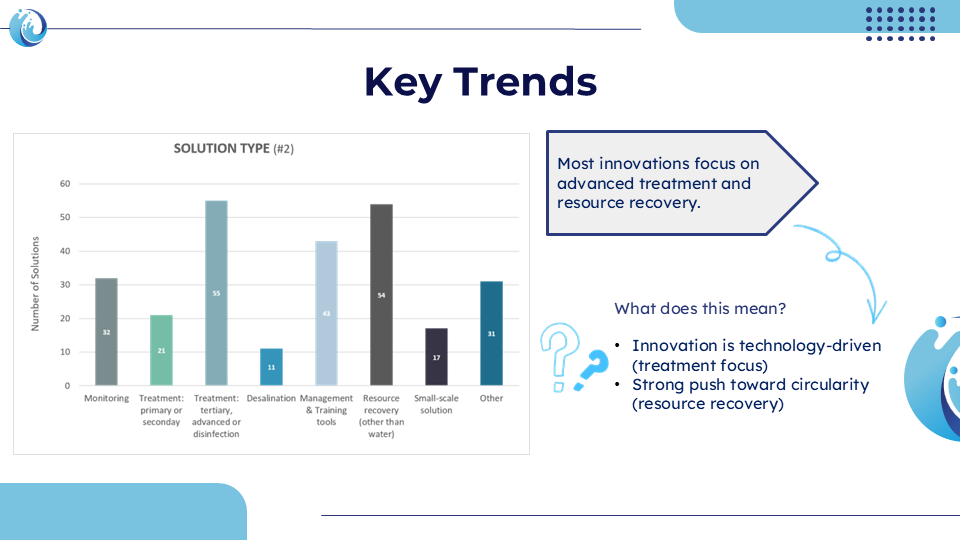
The analysis shows that WACES are predominantly technology-based, with a strong emphasis on innovation and practical application. Many solutions focus on advanced treatment processes and resource recovery. This reflects a technology-driven approach to water management and a growing commitment to circularity, where waste and wastewater are increasingly viewed as sources of recoverable materials and resources.
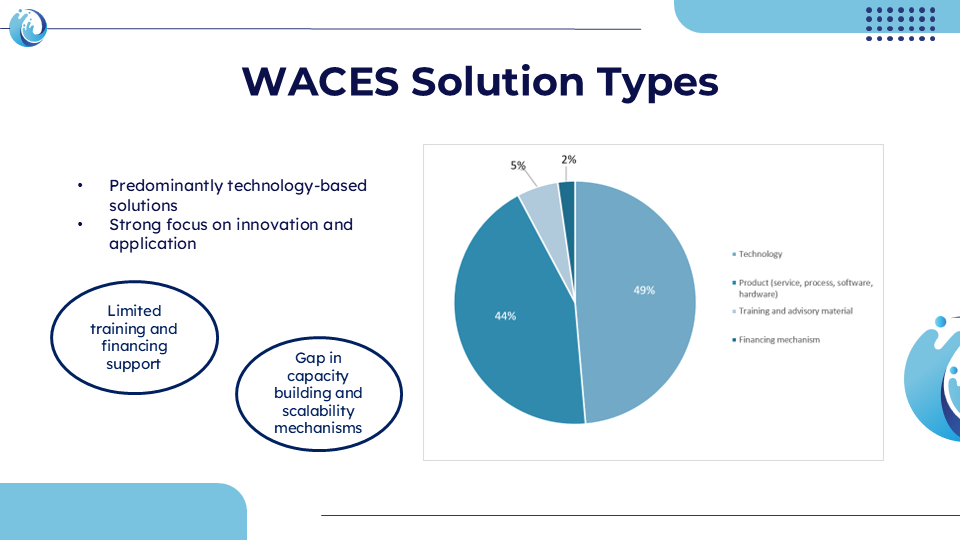
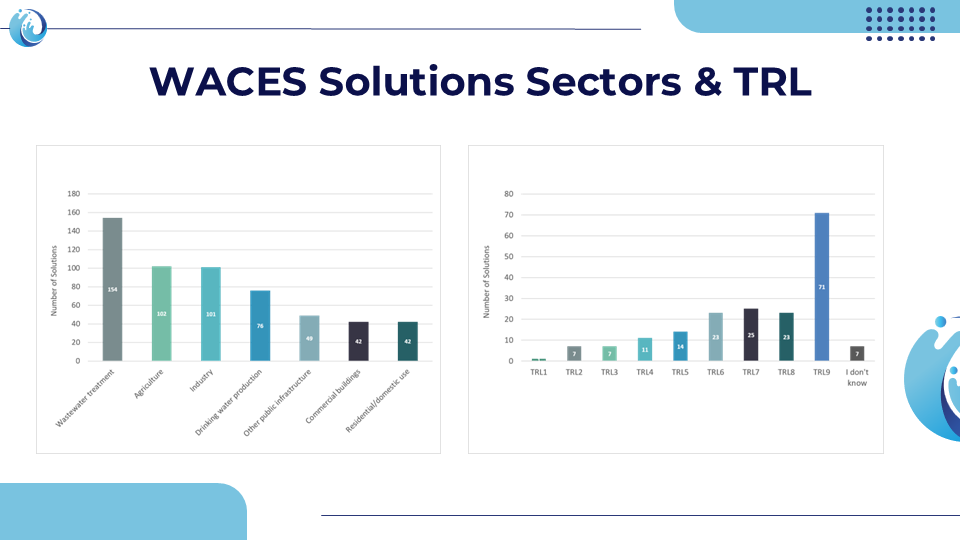
However, the database also reveals important gaps. Training, financing support, and capacity-building activities appear to be limited. These weaknesses may restrict the ability of promising innovations to move beyond individual projects and achieve wider market adoption or regional replication.
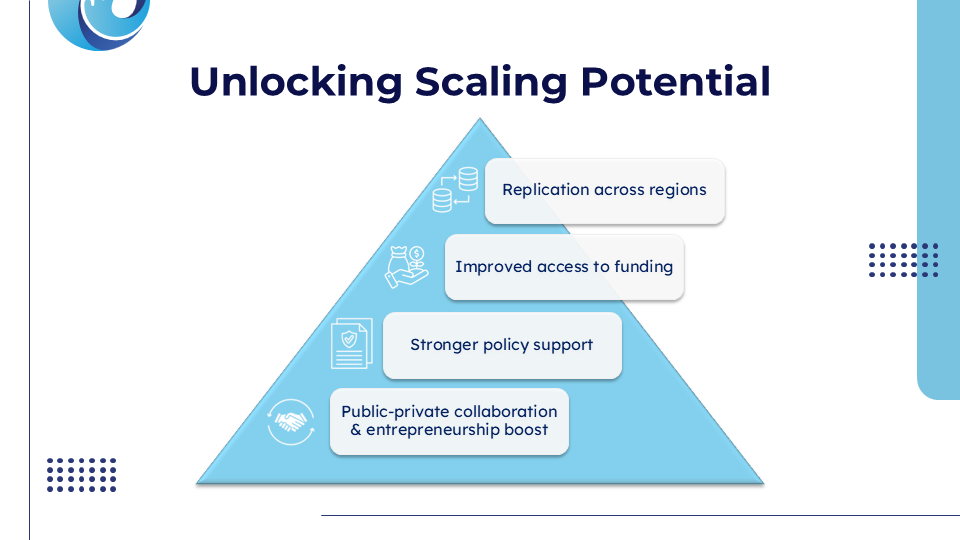
Unlocking the scaling potential of WACES will therefore require more than technological development. Improved access to funding, stronger policy support, and closer cooperation between public authorities, private companies, researchers, and entrepreneurs will be essential. Creating opportunities to replicate successful solutions across different regions can also increase their long-term impact.
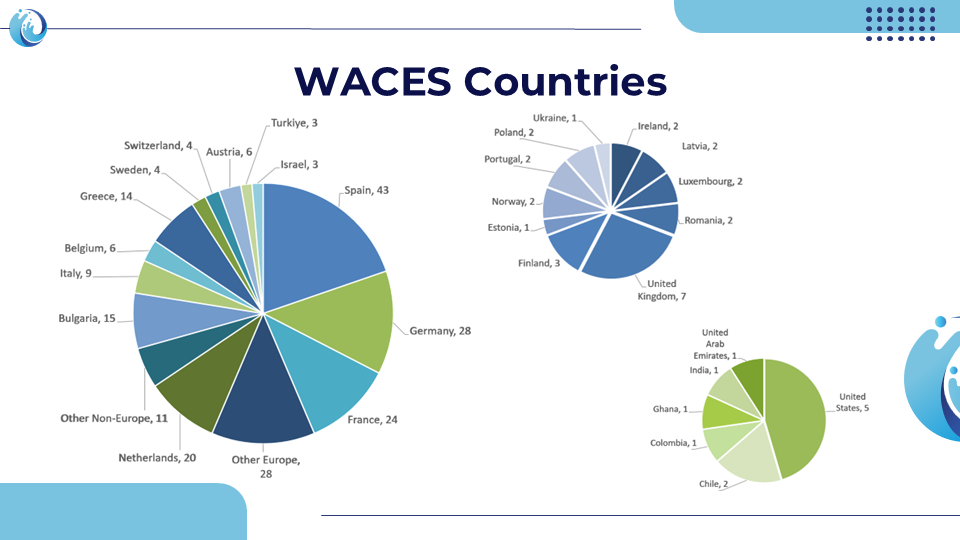
Overall, the BOOST-IN database demonstrates that significant innovation is already taking place. The next challenge is to create the financial, institutional, and collaborative conditions needed to transform innovative solutions into scalable and widely adopted practices.