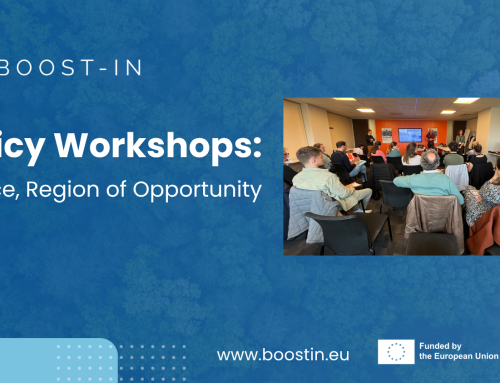

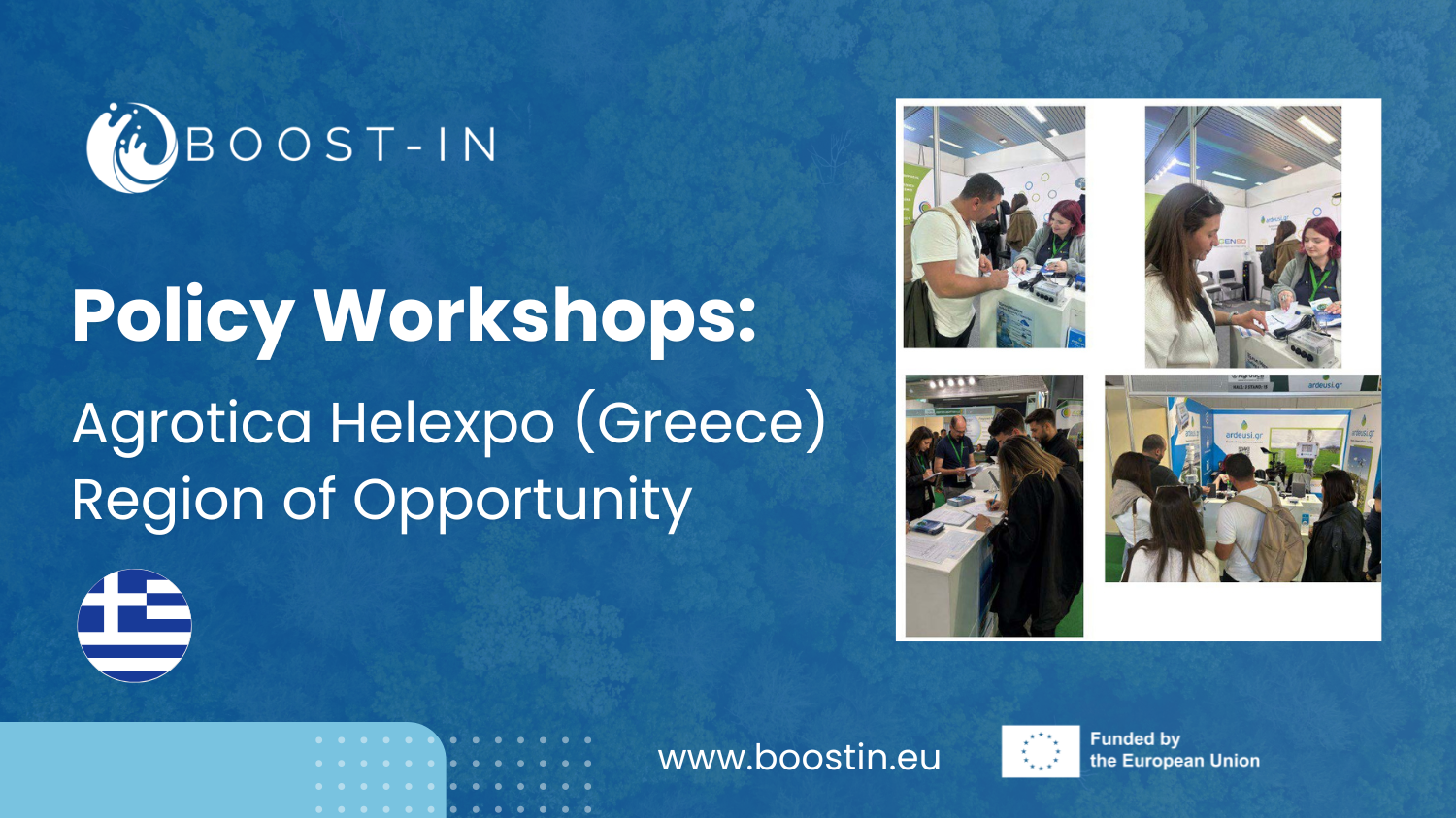
On March 13, 2026, the BOOST-IN project conducted its policy workshop in Agrotica Helexpo, Greec, aimed at accelerating the adoption of Water-smart Circular Economy Solutions (WACES) within the Greek Regional Operational Programme (ROp). The event brought together a diverse group of stakeholders from the public sector, industry, utilities, and research organizations to co-create actionable policy recommendations.
The workshop served as a critical validation exercise, allowing experts to assess the feasibility of proposed policy interventions and identify the most pressing challenges to implementation. The findings from this session will form the basis of evidence-based policy reform to support the transition toward a circular water future in Greece.
Key Findings and Prioritization of Barriers
The workshop results revealed that technological and institutional hurdles are perceived as the most significant constraints.
-
Infrastructure Gaps: Insufficient infrastructure, particularly regarding tertiary treatment and distribution networks for water reuse, was identified as the most critical barrier (receiving 27 votes).
-
Strategic Alignment: A lack of an integrated, long-term strategy for water reuse ranked as the second major hurdle (16 votes), highlighting an urgent need for clearer policy direction and governance alignment.
-
Social and Regulatory Hurdles: Stakeholders emphasized that distrust toward reclaimed water (11 votes) and complex, delayed permitting procedures (10 votes) continue to slow the deployment of circular solutions.
Economic Reality and Investment Environment
While economic and financial barriers received fewer votes compared to infrastructure and policy, participants noted that their importance should not be underestimated. Discussions suggested that low economic attractiveness and high upfront costs are deeply intertwined with regulatory uncertainty, creating a risk-averse environment for potential investors.
The insights generated from this workshop will now be used to draft targeted policy recommendations that address these specific dimensions—institutional, regulatory, economic, and social. BOOST-IN remains committed to highlighting where practical solutions can be implemented within the current framework and where structural changes are required to enable a truly Water-Smart society.